Mapping the Consequences of League Rule Changes on Spread Markets in Lower Division Football
Written by Drew Vogel · Aug 25, 2026
Mapping the Consequences of League Rule Changes on Spread Markets in Lower Division Football
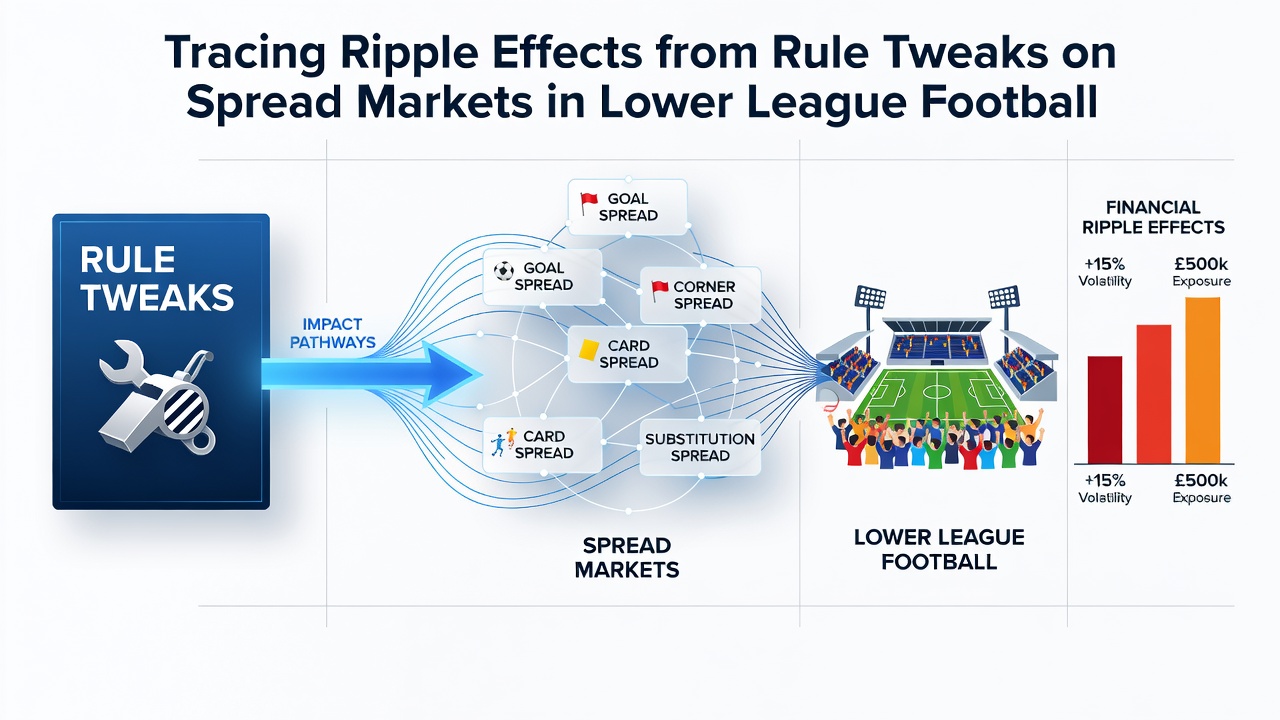
Spread markets in lower league football operate on narrow margins where small alterations in playing regulations can shift entire betting lines across goal totals, corner counts, and player performance metrics. Data from multiple European leagues shows that adjustments to substitution rules, time-wasting protocols, and disciplinary thresholds have produced measurable changes in how bookmakers set and adjust spreads during matches.
Core Mechanics of Spread Markets
Lower division competitions such as England's National League and League Two feature fewer resources for data analysis compared with top-flight sides, yet spread betting volumes remain substantial because outcomes prove less predictable. Bookmakers quote spreads on metrics including total goals, booking points, and shots on target, allowing punters to buy or sell positions based on expected ranges rather than simple win-draw-loss results. When leagues introduce rule modifications, the initial impact appears in pre-match lines, followed by in-play adjustments as patterns emerge across dozens of fixtures.
Recent Adjustments and Implementation Timeline
Leagues across Europe implemented several changes ahead of the 2025-26 season, including expanded concussion substitution allowances and stricter enforcement of added time calculations. These measures reached lower divisions in August 2026 alongside updated VAR protocols in select competitions that had previously operated without video assistance. Figures from betting operators indicate that goal spreads widened by an average of 0.3 goals in the opening month of the new campaign, reflecting increased stoppage time and altered match tempo.
Direct Effects on Goal and Corner Spreads
Rule tweaks targeting time-wasting produced immediate shifts in over-under goal markets. Matches in lower leagues began featuring longer periods of continuous play, pushing average goal tallies upward in the early weeks of August 2026. Spread traders responded by moving their sell positions higher, while those buying the over found reduced value until new equilibrium levels stabilized. Corner spreads reacted differently because longer injury stoppages reduced the number of set-piece opportunities in some fixtures, leading to tighter ranges quoted by market makers.
Secondary Ripple Effects Across Player Props
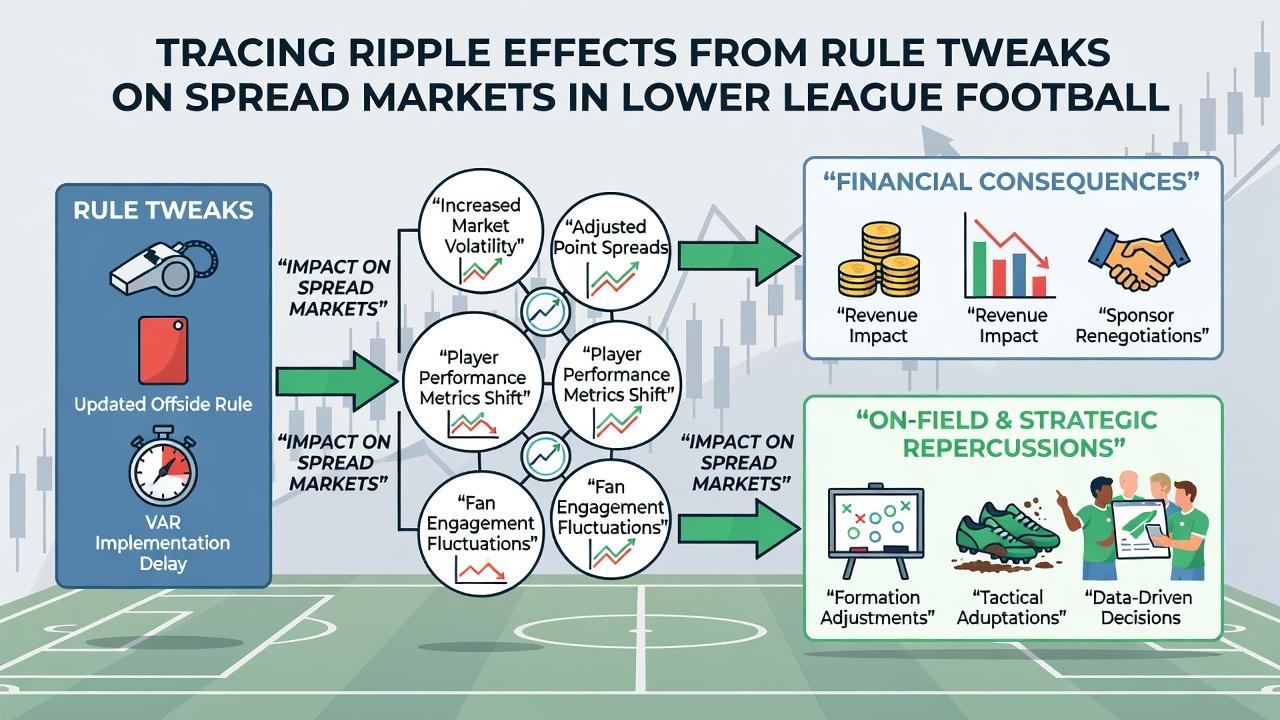
Changes in disciplinary guidelines affected booking point spreads and player-specific markets. Referees received instructions to issue cautions more readily for simulation and dissent, resulting in higher average card counts during the first round of fixtures in the 2026 season. Spread positions on individual player bookings became more volatile, with operators widening margins to account for inconsistent application across different officiating crews. Those tracking multi-game accumulations discovered that positions held over several rounds required frequent rebalancing as enforcement patterns varied by region and competition.
Market Adjustments by Operators
Betting firms recalibrated their models using data gathered from the opening weeks of August 2026. Historical baselines drawn from previous seasons lost relevance once new rules altered match dynamics, prompting increased reliance on real-time feeds and shorter adjustment windows. Lower league spread markets, already thinner than those in higher divisions, experienced sharper swings during live betting periods when early goals or red cards triggered rapid repricing across related lines.
Broader Patterns Observed in 2026
Research compiled by industry groups outside the United Kingdom, including reports referenced by the European Gaming and Betting Association, highlights how regulatory shifts in one area generate knock-on consequences for liquidity and pricing accuracy. Lower league spread markets proved particularly sensitive because participant data remains limited and sample sizes for new rule scenarios stay small during the initial months of application. Observers tracking these markets noted that recovery times for stable pricing lengthened compared with prior seasons, extending the period during which arbitrage opportunities appeared between different platforms.
Conclusion
Rule modifications continue to propagate through lower league football spread markets in ways that require ongoing monitoring by operators and participants alike. Data collected during the 2026 season demonstrates clear connections between changes in playing regulations and subsequent movements in quoted spreads, while also revealing the extended timeframe needed for markets to reach new equilibrium states. Further adjustments scheduled for later in the decade will likely produce similar chains of effects, underscoring the interconnected nature of on-field rules and off-field betting frameworks.