Weather Tech Algorithms Reshaping Live Odds at British Racecourses and Football Matches
Written by Jordan Schmitz · Oct 29, 2026
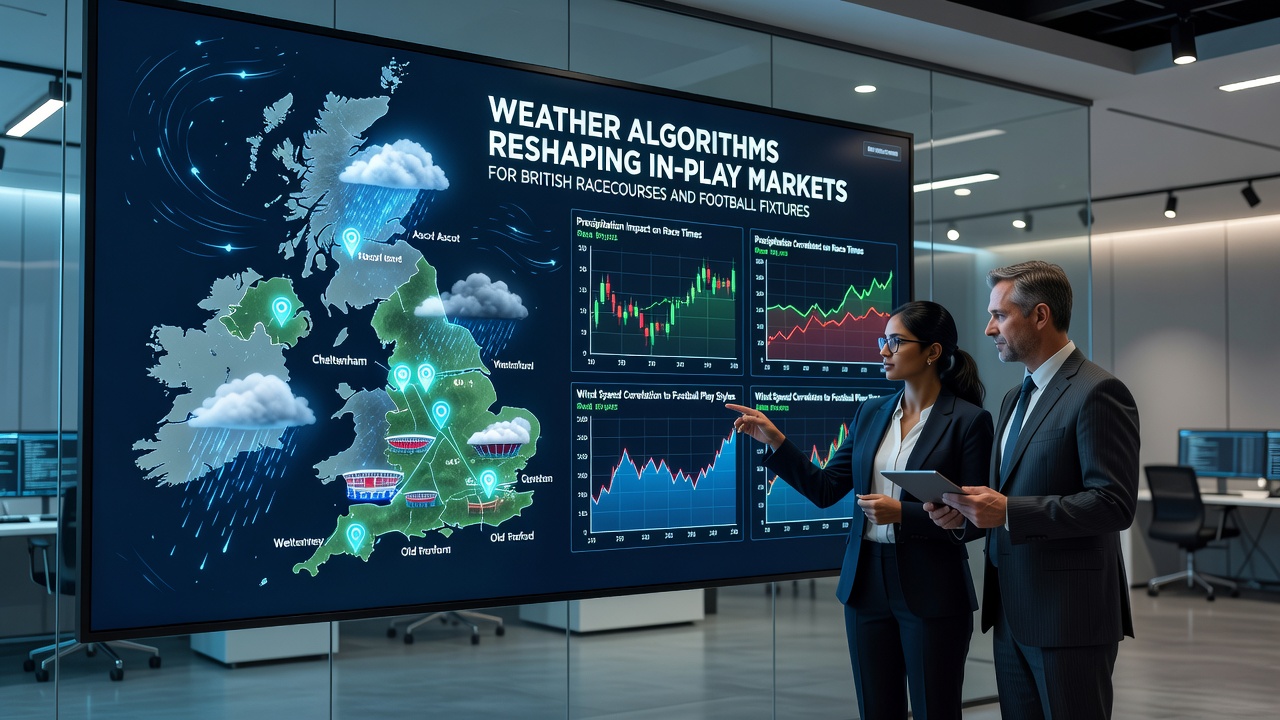
Weather Tech Algorithms Reshaping Live Odds at British Racecourses and Football Matches
Weather prediction models now feed directly into live betting platforms across British racecourses and football grounds, where sudden shifts in rainfall, wind speed, and temperature alter track conditions and player performance metrics in real time. Operators integrate data from high-resolution meteorological systems that update every few minutes, allowing odds to adjust during races at venues like Ascot and Newmarket or matches in the Premier League and Championship.
Integration of Meteorological Data Streams
Bookmakers pull inputs from multiple sources including satellite imagery and ground sensors, then layer those figures onto proprietary algorithms that recalculate probabilities for outcomes such as a horse's finishing position or a football team's corner count. Research from the European Centre for Medium-Range Weather Forecasts shows that short-term nowcasting accuracy has improved markedly since 2023, which in turn lets platforms issue revised odds within seconds of a downpour starting over a racecourse in October 2026.
At football fixtures the same streams affect metrics like expected goals when heavy rain reduces passing accuracy, while wind gusts above 25 mph prompt adjustments to over-under totals on long-range shots. Data indicates these changes occur faster than manual monitoring ever allowed, with systems at major operators refreshing in-play markets up to 20 times per minute during volatile weather windows.
Effects on Racecourse Markets
Ground conditions at British tracks respond quickly to precipitation, and algorithms now translate millimetres of rainfall into precise going descriptions that update before each race. Observers note that soft or heavy ground readings trigger immediate drifts in odds for horses with proven records on similar surfaces, while firm-ground specialists see their prices lengthen within the same minute. One study from the University of Reading's meteorology department found that incorporating live radar data reduced mispricing in in-play horse racing bets by measurable margins compared with earlier static forecasts.
Trainers and jockeys supply supplementary reports, yet the algorithmic layer dominates because it processes national weather station networks alongside on-site sensors. During autumn meetings in 2026, rapid changes in humidity and temperature have produced visible swings in market liquidity, with volumes spiking when algorithms flag an incoming weather front 30 minutes ahead of the scheduled start.
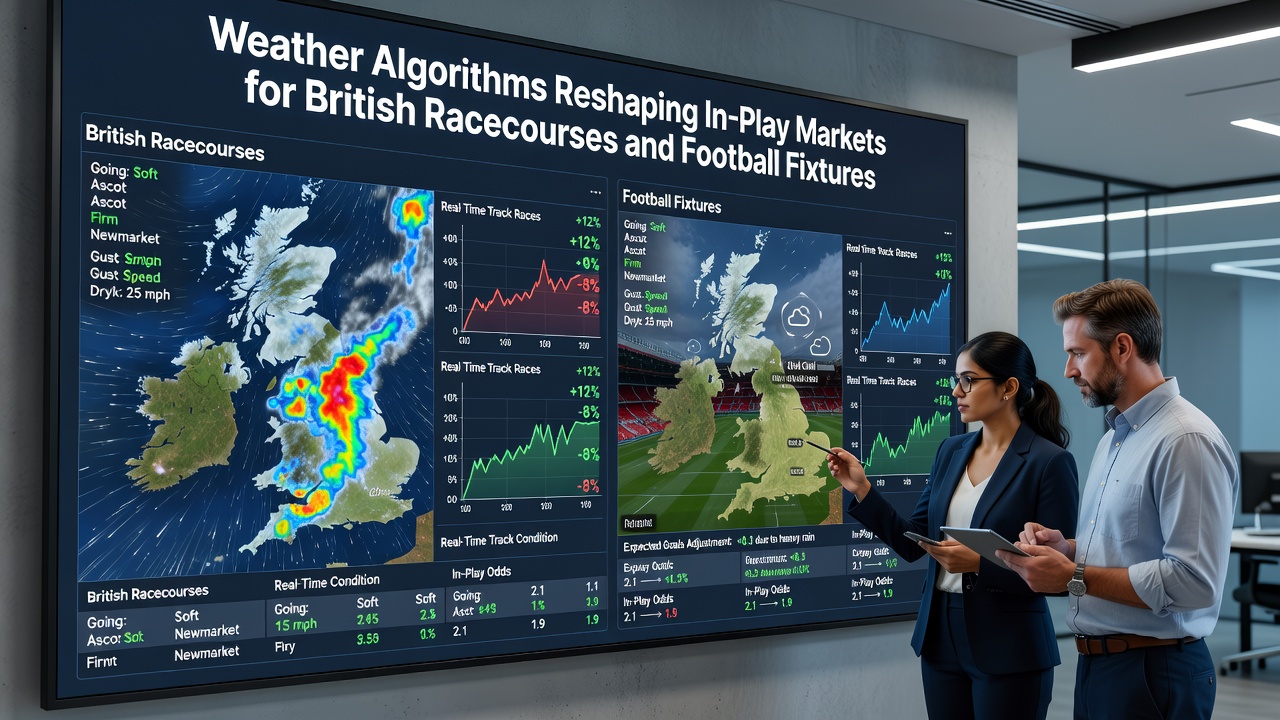
Football Fixture Adjustments
Football in-play markets respond to wind direction and intensity because cross-field passes and set-piece delivery become less predictable under gusty conditions. Algorithms quantify these effects by cross-referencing historical match data with current forecasts, then shift lines on total goals, player assists, and booking points accordingly. Figures from the Australian Bureau of Meteorology's sports analytics partnerships reveal parallel patterns in other leagues, confirming that wind speed thresholds correlate with measurable drops in expected goals across multiple competitions.
Temperature drops below certain levels also influence substitution patterns and injury risk models that betting platforms incorporate. When algorithms detect a rapid fall during evening fixtures, they adjust half-time result probabilities and player performance indices before the second half begins. This process runs continuously, with operators testing updates against regulatory sandboxes outside the UK to ensure compliance while maintaining speed.
Market Liquidity and Timing
Real-time weather inputs increase trading volume during live events because bettors react to the same data streams the platforms use. Liquidity concentrates around periods when forecasts shift, such as the approach of a cold front that could turn a firm pitch into a slippery surface mid-match. Industry reports from the Canadian Gaming Association highlight similar volume spikes in North American sports when comparable systems activate, suggesting the pattern is not limited to British venues.
Those monitoring the markets observe that the window for exploiting small discrepancies narrows because algorithms correct prices almost instantly once new weather readings arrive. Spread betting firms have begun publishing their own adjusted indices that explicitly reference meteorological variables, giving participants clearer signals about which conditions are already priced in.
Conclusion
Weather algorithms have become embedded in the infrastructure of in-play betting for British racecourses and football fixtures, delivering continuous updates that reshape odds according to changing environmental conditions. Data from international meteorological organisations and academic studies continues to refine these models, while market activity reflects the faster pace of information flow. As October 2026 meetings and fixtures unfold, the integration of these systems remains a central factor in how live markets operate across the sector.